Because leading well — and living fully — means not staying silent.
Since my last blog post in early September, I’ve travelled internationally, reconnected with a group of health IT colleagues that spanned a 30-year period of working together, moderated an AI panel at a local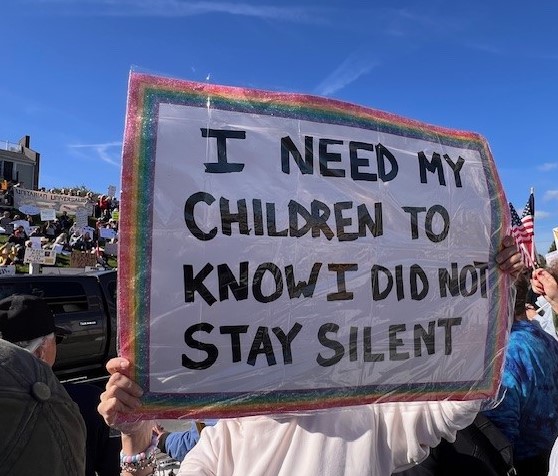 NEHIMSS conference, and participated in the largest peaceful protest in American history.
All these experiences are worth briefly reflecting on.
My international travel included a week in Prague on a Road Scholar Independent Art and Architecture tour with four other women as part of a 19-person group. It was a wonderful trip on many levels – art, architecture, music and history – with friends and interesting new people we got to know. On an independent afternoon, my good friend and I booked a local tour – “WWII in Prague and Operation Anthropoid Tour”. She wanted to go to Terezin, a concentration camp about an hour from Prague that I had been to on a previous tour 10 years ago. But we mistakenly booked the wrong tour and ended up doing a Prague walking tour instead – it was filled with history from the period before and during WWII. Like other times I’ve been in Europe in recent years, it’s clear that Europeans understand Fascism at a level many Americans don’t or are unwilling to.
On our way back from Prague, that friend and I met our husbands in Iceland for 5 days of touring on our own. While it was a wonderful time in a beautiful country, it was a great lesson in accepting what is not in our control. In this case, the weather! It was grey, rainy and windy for much of the week with no opportunities at night to see the Northern Lights. My advice for Iceland travelers – pack layers and waterproof clothes/shoes/boots (we did) and be flexible. The weather can change dramatically in an hour. And don’t hold your breath that you’ll see the Northern Lights.
Reconnecting with IT colleagues from the Partners HealthCare days (now called Mass General Brigham) was a poignant reminder of how a talented, committed group of people can make a significant difference. For those of you who don’t know John Glaser, just know that he led transformative changes in health IT starting back in the 1990s as we rolled out leading edge systems focused on improving patient safety and much more. I still consider him a mentor who has greatly influenced me as a leader, and he is a legend in our health IT industry. I’m honored to say I was part of that work at Partners as the CIO at Brigham and Women’s Hospital in the early 2000s.
Fast forward to 2025 and it’s all about AI. Last week, I moderated a panel titled “Challenges and Considerations for Implementing AI Within the Enterprise” at the HIMSS New England Chapter Digital Health Conference – “Survival Guide for the Disruption TsunamAI in Healthcare”. We covered governance, clinical integration and validation, strategic choices of build vs buy vs partner, measuring success and ROI, and the human aspects. The final question for the panelists was if you had to give one piece of advice to leaders preparing for AI in the next 2-3 years, what would it be? Their advice was short and to the point:
-
- Use it / learn it.
- Go slow / Don’t be afraid of it.
- Have a strategy / Iterate often / Find a partner.
- Keep up with what end-users are using.
With AI in mind, I’ll pivot to the last point – separating fact from fiction and recognizing real images rather than AI generated ones is something we all must keep in mind. We are bombarded daily with the most divisive, nasty politics I’ve ever seen on social media and in the news.
Know your values and stick to them. Engage in civil conversations and disagreements with others. And as my sign at Saturday’s peaceful protest said, “The Power of the People is Greater than the People in Power”. I’m an optimist!