On Connections and Caring: The Work That Outlasts Our Careers

My LinkedIn feed was filled with CHIME Fall Forum recaps and pictures this past week. I refrained from posting a recap as I focused primarily on the one-on-one people connections. At the closing session we were asked to give one word that best described the week. Mine was “connections” – it turned out to be the top one in the resulting word cloud from all the attendees, along with several synonyms for connections. This is especially true after years of virtual meetings and knowing people only on zoom – the value of in-person time is immeasurable.

As the days went by at the fall forum, I realized that my primary role in professional circles these days is as a connector. I had many conversations involving career advice and made a lot of introductions for people. I heard how much this was appreciated by people I talked to along with their recognition that I do this for so many others in our industry.

I’m grateful to all those who mentored and helped me during my four decades in health IT management. So, my commitment to developing next generation leaders is something I take seriously.

At this point in my career, providing coaching services, volunteering as a mentor in multiple programs, informal mentoring, giving career advice, sharing information and intel about current job openings, making introductions, and a lot of listening is what I enjoy doing and am willing to give time to. I probably get 1-2 requests a week and always make time to schedule a short call.

I also had a few conversations with CHIME staff, board members, foundation firms, and colleagues about how LCHIME (lifetime CHIME) members can continue to contribute once they no longer work full-time for a provider organization. Continue reading

Why I Keep Showing Up: Coaching, Mentoring, and Developing Future Leaders

With graduation season behind us, the end of June is a great time to talk about developing the next generation of health IT leaders.

I’ve been a volunteer mentor to 7 students and early careerists over the past several months through two different programs – the New England HIMSS Chapter and RIBBA. I’m happy to say that five of them have gotten jobs in a very tough job market. Part of our work together included refining resumes, preparing for interviews, answering their questions on salary negotiation, and helping them get in front of the right people at the companies where they applied. Some of my mentees were international students who faced unique concerns given the new administration.

I currently have several coaching engagements in process and have coached many more health IT leaders over the past 10 years. Progress and growth come in many different forms depending on one’s leadership development and career goals. Two of my coachees have recently been named to the Becker’s list of “100 Women to Know in Health IT 2025.” And in recent years, another coachee was recognized with the “HIMSS Most Influential Women in Health IT Award” along with five other women. As we worked together, some of their goals were to increase their networks and broaden their involvement in our industry. These recognitions affirmed their progress towards these goals.

Most weeks my schedule also includes at least 1-2 calls with colleagues who are in transition between jobs or considering make a change – they are looking for some perspective and advice as well as insight on open positions. Continue reading

Fostering Social Connection for Health and Well-Being

Relationships and human connection matters. Whether it’s a best friend / BFF, a close work colleague, a neighbor, a roommate, or a long-term committed spouse or partner, relationships do matter. And they take time to develop, nurture and sustain.

Vivek H. Murthy, MD, former Surgeon General from 2015 to 2017 and again from 2021 to 2025, spoke at the HIMSS19 CIO Forum on the prevalence of loneliness in our society and its devastating impacts on health. His 2023 book, “Together: The Healing Power of Human Connection in a Sometimes Lonely World”, makes a compelling case that loneliness is a public health concern and offers inspiring stories of how individuals and communities are helping people realize they are not alone.

In 2023, HHS published “Our Epidemic of Loneliness and Isolation – The U.S. Surgeon General’s Advisory on the Healing Effects of Social Connection and Community”. In Dr. Murthy’s opening letter of the publication, he said:

“Each of us can start now, in our own lives, by strengthening our connections and relationships. Our individual relationships are an untapped resource – a source of healing hiding in plain sight. They can help us live healthier, more productive, and more fulfilled lives. Answer that phone call from a friend. Make time to share a meal. Listen without the distraction of your phone. Perform an act of service. Express yourself authentically. The keys to human connection are simple, but extraordinarily powerful.”

My husband and I have lived in 7 different cities since we first met. That means many different jobs, neighborhoods and church communities.  I envy people who have close friends that go all the way back to grade school or high school. Continue reading


Networking and navigating a tight job market

Are we in a tight job market? It sure sounds like it from all the calls I’m getting from colleagues having a hard time finding a new position. Probably the best indicator though of a tight job market is that unemployment has been under 4% for the last 2+ years.

At StarBridge Advisors, we have many advisors who are only interested in interim and advisory work while others are looking for their next permanent position but available for interim and advisory engagements in the meantime. On our recent monthly advisors call, I asked those who are looking for their next permanent position what their current job search experience tells them. Trends they see are more internal promotions rather than hiring from outside the organization and hiring from the local area or region rather than relocating someone. One of them also commented that with so many boutique search firms, it can be hard to know who to reach out to regarding openings.

Another sign of the tight job market might be the fact that a LinkedIn post I shared on job interview skills got over 2,000 impressions in a short timeframe.

Knowing how important networking is, I take every call request I get from people I know who need career advice. And when colleagues reach out asking if they can send someone my way to talk, I say yes. I seem to be a go to kind of person keeping tabs on the market for health IT leadership positions but more importantly I’m always willing to help if I can. People have helped me along the way, so I do the same.

I also write a lot about career management and all things related in this blog. You can always search previous posts for more career advice. And I do short career coaching engagements – if it helps you to land your next opportunity, this small investment in yourself could be very worthwhile!

I know from personal experience that a job search takes a lot of patience and persistence. Beyond networking, spend time doing your research. Maintain a positive attitude and be open to various possibilities. Our industry continues to evolve, and the health ecosystem is broad with many different types of organizations to consider.

Related Posts:

Navigating career crossroads

Career advice revisited

Considering a career move?

Building bridges for success: the role of interim leaders in healthcare IT

I have written in the past about interim management in terms of when it makes sense for an organization and shared some lessons from my own experience. Following my career as a CIO at two leading academic health systems, I have served four different healthcare providers as an interim leader – three as CIO, one as CTO. As a principal at StarBridge Advisors the past 7 plus years, I have placed and overseen interim IT leaders at many healthcare organizations. I know firsthand how interim leaders provide an important bridge during leadership transitions and can make a significant impact on an organization in a short time.

I recently had the opportunity to do an interview with the Advisory Board on interim management. We covered a lot of ground together. Some of the highlights from our discussion:

    • Rising Executive Turnover in Healthcare: healthcare organizations are grappling with a 66% increase in hospital CEO exits in 2023 and there is a resulting surge in demand for interim leaders.
    • Role of Interim Leaders: interim leaders play a critical role in steering organizations through transitions, making quick assessments, and delivering tangible results within a six-month timeframe.
    • Preparing for Transition: clear communication and preparation are needed when bringing on an interim leader, including briefing books, townhall meetings, and the support of the hiring executive is critical.
    • Driving Long-Term Improvements: organizations can leverage the expertise of interim leaders to drive sustainable change, focusing on agreed-upon areas of improvement and setting the stage for the permanent leader’s success.

The Advisory Board article, How to navigate executive turnover: A Q&A with StarBridge Advisors’ Sue Schade (advisory.com), is available to non-members if you set up a free account.

When your organization has a critical IT leadership gap, turn to StarBridge Advisors. We can make available to you fully vetted, world-class healthcare IT executives, inclusive of CIOs, CISOs, CMIOs, CNIOs, CTOs, and others. And if you choose to use an internal interim, we can provide coaching support to them to ensure they are well positioned to be successful in the role. Our advisors all come from health system backgrounds and have a wealth of knowledge and experience which often stretches far beyond the provider space.

Related Posts:

Bridge Builders: Interim Management Solutions for Health Systems

Talent shortage? Great resignation? Interim leaders can help

Interim Management – Providing a Bridge During Transition

When an interim CIO makes sense

Stepping into an interim leadership role

Celebrating Women’s History Month: Championing Diversity in Health IT

What better time than Women’s History Month to highlight the many initiatives lifting up women in our health IT industry.

It has been 10 years since I started speaking out more publicly as a health IT professional about women’s issues though I am a long-time feminist having come of age during the women’s movement of the 1970s. In 2014, I was asked to do a keynote talk on a topic of my choice at a 200-person health IT conference. It was one of those vendor sponsored, invitation only events. I was the speaker during the first night’s dinner. I titled my talk: “Our Future Workforce – Unlocking the Potential”. I talked about the fact that not enough women were going into STEM (science, technology, engineering, and math) fields and the need to encourage and support women at all levels. Prior to the talk I wrote this post – Technology, where are all the women? – and afterwards I wrote this one describing the positive response to my talk – Women and technology, part 2 – from an audience that was probably 80% men!

When I launched this blog several months before that talk in 2014, I made sure to create a category called “On Women and Work” knowing I’d be periodically writing about women’s issues, and not just in March each year.

Fast forward to 2024. I am certainly not a lone voice in our industry. Many women focused initiatives have emerged. Here are just a few to highlight: Continue reading

The art of mentoring: insights for leaders

Being a mentor is a fundamental role of leaders. A mentoring relationship may be a formal or informal arrangement. I’m currently participating in two formal mentor programs through the NEHIMSS chapter and the Emerging Leaders Program of RIBBA (Rhode Island Black Business Association). Informally I serve as a mentor for many people.

I’ve written many blogs referencing the importance of being a mentor and having a mentor. Bill Russell and I share a commitment to developing next generation leaders. He outlined his concise framework for mentoring on a recent This Week Health Newsroom podcast – “A Framework for Mentoring”. As Bill explains, it’s all about helping your mentee to expand – their network, experience, knowledge and thinking.

As a leader, you have a broad network, and you can help expose your mentee to it. I truly believe that one of the most important introductions I ever received was as the new CIO at Brigham and Women’s Hospital when I attended my first CHIME conference in early 2000. My boss, John Glaser, CIO at Partners HealthCare, (now called Mass General Brigham) introduced me to his CIO colleagues at other large health systems and academic medical centers.  Those connections helped greatly in my early CIO years and laid the foundation for getting more involved in CHIME. When I mentor people, making introductions to others who can be helpful to them is high on the list early in our conversations.

Expanding a mentee’s experience can happen most effectively when you work together in the same organization. Being able to have your mentee participate in certain meetings or initiatives on your behalf or with you is a powerful show of support and encouragement to them.

And of course, expanding their knowledge and thinking comes from your ongoing discussions and the resources you recommend to them. This Week Health is one of the resources I regularly recommend to mentees and others I talk with who are looking to stay current and relevant. Between the various podcasts, interviews with health IT leaders, and daily news headlines, it is worth checking out and sharing with others. As Bill describes it, “This Week Health is a set of channels and events dedicated to transform healthcare one connection at a time”.

Think back over your career to the people who have mentored you in some way. Guessing you would agree that what mentors do is truly priceless.

Related Posts:

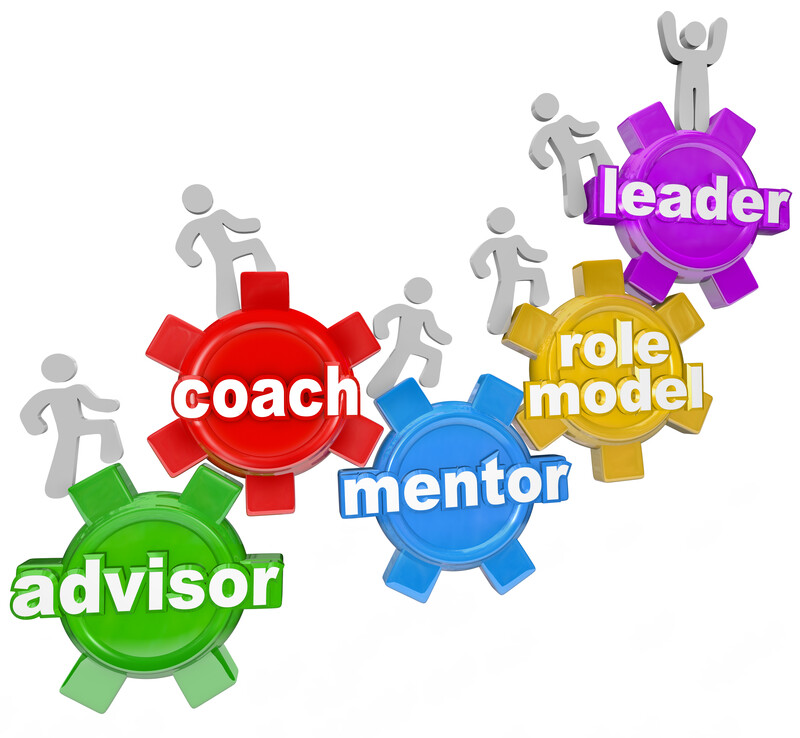
Developing tomorrow’s leaders through mentorship and coaching

Mentoring, role models and sometimes a little nudge

Leaders as mentors

7 Ways to develop the next of generation leaders

Navigating career crossroads

I’m fresh off another stimulating in person CHIME Fall Forum. Many colleagues have already posted on LinkedIn their recaps of the forum speakers and key takeaways. One of my takeaways is the importance of networking on many different levels. A common conversation for me was colleagues who are looking for their next career move or currently in between positions. As I organized my post CHIME to do list on the plane home, I found that I had several people to follow up with from that perspective.

Ironically, when I got home and back into my daily podcast listening routine, the first one I heard was the ThisWeekHealth Newsroom show from November 10 – “The Signs it’s Time to Move on as a Leader”. On Fridays, Bill Russell usually does a stream of conscience commentary on a topic. This one tied very well into some of my CHIME conversations. I encourage you to check it out – only 10 minutes long.

If the end of year approaching has you rethinking your own career plans, check out my previous blogs on career advice. Earlier ones are listed in this blog – “Career advice revisited”. Newer ones are referenced in this blog – “Considering a career move?”. You will find some useful insights and advice for your journey.

And if you’re looking for a career coach, this blog might be helpful – “When to use a career coach”. I’m happy to explore with you what a short 3-month engagement would look like and how best to customize it to meet your unique needs.

Health IT leadership searches and Interim management industry trends

I have written in the past about interim management in terms of when it makes sense for an organization as well as my own experience. Over the past several years, I’ve been fortunate to serve four different healthcare providers as an interim leader – three as CIO, one as CTO. I’ve learned firsthand how interim leaders provide an important bridge during leadership transitions and can make a significant impact on an organization in a short time.

I encourage you to check out my recent StarBridge Advisors blog post – Bridge Builders: Interim Management Solutions for Health Systems. In this new post I cover industry trends I am seeing in health IT leadership searches and interim management decisions including internal interims, relocation and onsite requirements, financial and budget constraints, and more.

Related Posts:

Talent shortage? Great resignation? Interim leaders can help

Interim Management – Providing a Bridge During Transition

When an interim CIO makes sense

Stepping into an interim leadership role

Developing tomorrow’s leaders through mentorship and coaching

My commitment to developing next generation leaders is something I’ve often talked and written about. That commitment is as strong as ever.

This week I started a 10-month formal mentor program through the NEHIMSS chapter for two different mentees. We’ll talk every other week for 30 minutes focusing on their goals for the mentorship. A few weeks ago, I started my newest coaching engagement with a seasoned IT leader. We are in the early stages of this process, including gathering input from peers. We’ll talk twice a month for an hour with assignments in between. And I’m finalizing a presentation focused on lessons in leadership to deliver virtually in early November to the management team for a CIO colleague at a large academic health system. He brings in an industry expert 6 times a year to share their views and help educate his team.

I’m impressed with the formality and structure of the NEHIMSS mentor program – it appears to be a great model for other chapters and organizations and has evolved since the program was first started in 2014. Mentor and mentee applications are submitted, the mentorship committee then reviews them, makes the matches, and communicates to the pairs with supporting materials including a FAQ and a list of Do’s and Don’ts. Both parties sign a mentorship partnership agreement that includes the mentee’s goals and the roles of the mentor and mentee for each goal.

I have provided professional coaching services for many health IT leaders over the past 7 years. And I have served as both an informal and formal mentor to many during my decades long health IT career. While both have value, coaching and mentoring are different. Continue reading