Spring can’t come soon enough

As my daughter says, “You didn’t really think that through, did you?” She wasn’t referring to getting a new puppy which we’d talked about for months. She was referring to getting a “winter puppy” in the North.IMG_0295 (002) puppy

We trained new puppies in the summers of 2006 (Pepe) and 2008 (Coco). We had to let go of Pepe in 2017 due to a tumor on her liver; since then, we focused all our love on Coco. Then, we decided Coco needed an “intern”. Coco would have a friend that she could help train. What a concept!

We got our new puppy, Rosie, in late January. She was about 10 weeks old then.  We bought her a little dog sweater and puffy dog coat. We got her a collar and a leash. We hadn’t really thought that through.

Because, when we picked her up, the breeder said she was like an infant. She couldn’t go outside until probably end of March or she might catch a cold or pneumonia. Plus, she needed her three puppy shots – second was due mid-February and the last one mid-March – before she could be outside around where other dogs have been. Coco is up to date on shots, so they can share space in the backyard. That is, after the snow and cold is gone.

I haven’t even gotten to the two dogs getting to know each other part yet.

We set up Rosie in the shower stall of our guest bathroom. We made a little bed for her, put her food and water dishes nearby and put down papers for her to do her business on at the other end of the shower stall. We leaned a baby gate across the entrance to the shower. We let her out and played with her on the bathroom floor several times a day. We brought her down to the living room at night to sit on our laps while we watched TV. Mostly this worked and she was content. Continue reading

2018 Countdown – top 10 blog posts

It’s the time of year for top 10 lists and countdowns so I’m adding mine to the mix. These are my most read blog posts from 2018. If you missed any of them first time around now is your chance to check them Top10out.

I cover a range of topics and it looks like readers appreciate the variety. Here are the top 10 as measured by total views with a countdown from number 10:

#10 – Find your voice, a mentor and be bold – Career advice is always a popular topic whether you are early or late in your career.

#9 – What does a high value conference look like? – There are many ways to spend time and money on professional development, some conferences provide unique value.

#8 – Family ties – we all have a story – It’s important to know where we come from to understand who we are.

#7 – Technology making a difference at scale – One of my personal favorites! The power of technology takes many forms. In Africa, drones can be lifesaving.

#6 – 8 Signs of a strong security culture – Security is always a topic of interest as threats continue to increase and organizations are challenged to keep up. Continue reading

Never underestimate the importance of good communication

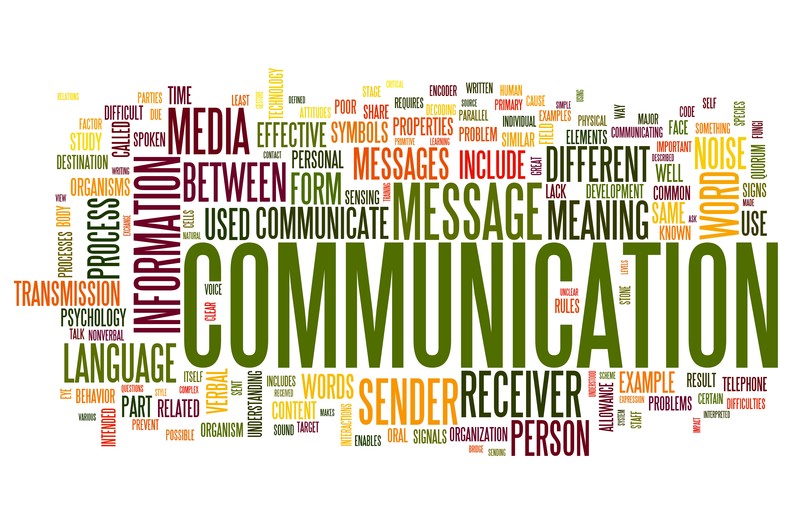
When you go into business for yourself, you have to make a lot of decisions. One of the most important decisions is who to partner with. I have learned a lot from my two colleagues, David Muntz and Russ canstockphoto9328194 (1) communication word cloudRudish, in our StarBridge Advisors venture over the past two years. They have very different styles, skills, knowledge and experience. But together we make a great team!

Communication skills are critical no matter what business you are in or what level you are at in an organization. David recently wrote an excellent piece on communications for our StarBridge Advisors “View from the Bridge” blog – Meaningful Communication – 10 Lessons from Life.

His life lessons provide an important framework for successful communication in all forms. And as he says, without communication, collaboration is difficult.

I highly recommend you check out David’s blog post. And if you like what you see, read more of our View from the Bridge posts and subscribe to receive notifications of new posts.

Related Posts:

8 Tips for start-ups

2017 Lessons from an entrepreneur

One year anniversary, how are we doing?

It’s launch time


What can we learn from sports?

My husband and I recently went to a Red Sox game. We are not the biggest of sports fans, but we like to get to a game or two each year. It was a glorious summer day – sunny sky with a temp in the mid-70’s. A canstockphoto56121 (1) baseballperfect Sunday afternoon for a baseball game. We all know that baseball can be slow at times with brief moments of intense action. I put my crowd dynamics lens on and observed.

First there’s the “wave”. How do they start? And what does it take for them to be successful? The first one started in a section near right field, had to go through the grandstand area, and over to the “green monster”. If you don’t know Fenway Park, the green monster is a special section that probably has no more than 200 people in it. A prime spot for the wave to lose momentum. But it didn’t. It went all the way around the ballpark at least twice.

When another section started a second wave later in the game, it fizzled quickly. But my husband made sure he did it when the wave rather pathetically got to our section. He didn’t want to be the one to kill it. The takeaway – everyone must participate to make it successful.

Then there was the “dance off” between innings. The cameras focus on different fans around the park and when people see themselves on the big screen they do their best dance moves. You never know what you’ll see. Inhibitions are off for many people, especially kids. It was a young middle school age boy who won – he had the moves and the fans loved it. The takeaway – be less inhibited and you may go further.

And then there is the rhythmic clapping that starts and grows in intensity. It’s either to encourage the home team at a critical moment or to make the other team nervous. Continue reading

Advice for bloggers: valuable content and discipline

In the early 2000s, there was an explosion of blogs, but I never pictured myself as a blogger.  But that changed four years ago when I started a weekly blog to share my health IT experiences and insights with canstockphoto13207113others.

It is a weekly discipline I’ve maintained ever since.

I love data. So, I look at the statistics on views per week and per post. I’ve published over 200 blog posts and have had close to 100,000 views.

Over the four years, the posts on lean are by far the most popular – 6 of the top 20 posts – including huddles, visual boards, Gemba walks, and use of an A3. The lean community shares content broadly and openly as they learn from one another. A very good practice! So, maybe I shouldn’t be surprised at the popularity of these posts.

I ask myself “what generates views”? Is it the opening tease and blog title that attracts readers? Is it the title or general topic that causes subscribers to read a blog when they get the email notification? Is it the re-publishing by other publications or links from other sites?

Despite all the analytical tools and articles available on how to increase blog subscribers and readers, it comes down to valuable content. Yes, the catchiness of the title and the use of keywords make a difference. I learned that decades ago writing headlines when I was editor of my high school newspaper. But back then the world of content was all paper; now you can search for anything online in seconds. We all know that on social media you must compete for “eyeballs.” Hence, the importance of keywords.

When I first considered starting a blog, I sought out an expert to give me advice. I called Anthony Guerra at HealthSystemCIO.com. Was it a crazy idea or should I go for it? He encouraged me early on and I’m truly grateful for that. It helped me go from considering blogging to actually being a blogger.

I’ve learned how important amplification is in the world of social media: tagging people, likes, comments, and shares. Then there’s “going viral” – nobody knows the secret formula to that. Continue reading

8 tips for start-ups

Are you used to working in a large organization with a lot of support departments, established policies and procedures, and administrative systems? If so, you may complain about some of it as being bureaucratic,Landscape of wooden pathway with the changing environment too slow and burdensome. You may take a lot of it for granted. But it also helps you get your work done most days.

Before you think the grass is greener on the other side as the saying goes, remember that start-ups don’t have any of this day one. By the end of the first year they probably have the basics in place. As they grow and scale, they create the new systems and processes they need.

I am one of those people who worked my entire career in very large organizations. I’ve been on the start-up side with StarBridge Advisors now for a year and a half. We were fortunate to have basic back office functions available day one through a shared service agreement. But there has still been a lot of new to create.

Based on this new world for me, it’s probably no surprise that I have some lessons and tips to pass along. Here goes:

Create standard templates – Whether it’s administrative tools to reuse such as your master services agreement (MSA) and statement of work (SOW) or tools for client work such as interview forms and assessment outlines, you need to create and continually evolve them. It will make you more efficient and provide consistency for your team and your clients. Our Toolkit for Interim IT Leaders is one example of those tools.

Establish repeatable processes – That old saying “no need to re-invent the wheel” is applicable here. But first you need to create your “wheels” for different processes then regularly revisit them to ensure they are as streamlined as possible.

Share documents – Creating a document repository with good version control should be a first order of business for even the smallest of firms. After all, you need a place for all those templates and documented processes.

Don’t duplicate efforts – Be clear who is responsible for what and who owns what. Collaborate and get feedback from one another but don’t trip over each other. You have a small team and limited hours so every minute counts. Continue reading

2017 lessons from an entrepreneur

If 2016 was a year of transition for me, then 2017 was the year of settling into the new. That is, if launching a new business and working with new clients can be called settling in. As 2018 looms, it’s time canstockphoto46064496 (002)to reflect on lessons from 2017.

2017 has been a year of learning what it takes to grow a business and gain the trust of clients. I covered this in the post, “One year anniversary, how are we doing?” It’s also been a year of learning how to spend more time with family – my retired husband, my daughters and grandkids. But that will have to wait for a future post.

My most important business lessons this year:

Do what you love and are good at – Yes, it’s important to have stretch goals and get out of your comfort zone. But if you truly love what you do, you are going to get better all the time. Our client work at StarBridge Advisors involves a range of IT consulting, interim management and leadership coaching. As an operations type person and change agent, I enjoy being an interim CIO. To work for a period with a new team and figure out how best to help them succeed is challenging and rewarding. And to work with someone as an executive coach as they learn about themselves, identify their development needs and goals, and work through their action plan is also very challenging and rewarding.

Relationships are everything – Whether it’s our clients or channel partners, developing and sustaining honest, open and trusting relationships is critical to success. Continue reading

Outside eyes can help

A year ago, I was asked by a University CIO to participate in an External Advisory Committee on Information Technology. At that point, I was just finishing up the interim CIO engagement at University canstockphoto47150931Hospitals and launching a new HIT advisory firm, StarBridge Advisors. I asked the CIO “why me” and considered the time commitment. I said yes.

This week I attended the second half day in-person meeting of the committee. The first was a few days before I started the interim CIO engagement at Stony Brook Medicine in March.

These commitments to other organizations take time: time to review extensive materials in advance, travel and connecting flights, and in-person meetings.

But they are a win-win.

I learn and they learn. I am impressed with this CIO and his IT leadership team as I have gotten to know them. I am impressed with the support and engagement they have been able to garner from the Chancellor and Provost. I am impressed with my colleagues on the committee – a mix of university CIOs and IT business leaders. And I’m impressed with the ambitious, multi-year roadmap to replace their financial, HR and student administration systems with a new, integrated solution.

While my IT experience is in healthcare, I have worked in academic medical centers and collaborated with university IT teams. Financial and HR systems are universal across industries. But I have not gone this deep, before, into the unique systems of the higher education sector. I’m learning that student administration systems have some of the same complexities and challenges that electronic health records have in my world.

Of course, IT implementations regardless of industry and domain have many common components. Addressing a current state that is fragmented, self-developed, and highly customized with proven, integrated vendor solutions is not new to me. The many decisions involved in data conversions and archive strategies, the establishment of robust data governance, the inclusion of change management throughout the project – these are all components that we in IT know are fundamental to success. Continue reading

One year anniversary, how are we doing?

For the first birthdays of my four grandkids, there have been party hats and “smash” cakes. But what does a small team of entrepreneurs do on the first anniversary of founding their firm? They take stock and plan canstockphoto48088945for year two.

David Muntz, Russ Rudish and I launched StarBridge Advisors in October of 2016. So how does a health IT advisory firm measure success after year one?

Number of clients – We have already assisted 12 healthcare provider organizations with some repeat engagements and have national reach.

Revenue – Any first-year projections can be a crapshoot but you need to start somewhere. We may have been overly optimistic but we are well on our way with our client base and pipeline.

Size of our team – In addition to our three principals, we now have almost 20 advisors on our team available for interim management, leadership support and consulting. Their IT leadership experience includes serving as CIO, CTO, CISO, CMIO or CNIO in healthcare organizations.

Channel partners – We work closely with several larger consulting firms who offer services that we don’t. We partner with Healthcare IT Leaders, a leading staffing firm and Rudish Executive Search, which specializes in healthcare.  And we are working with a few start-up technology vendors who are bringing to market new and novel solutions for healthcare providers.

Referrals – Our principals combined have over 90 years of experience in the healthcare industry. Our relationships are a key component of growing a new business and getting known in the market.

Name and brand recognition – A year ago we had decided on a name and incorporated, but had yet to figure out our branding. That was some fun work at first; by January we launched our website and social media presence. Continue reading

Tyranny of the urgent

You have priority work scheduled on your calendar. You have carved out time when not in meetings to get some work done. Yet urgent issues keep finding their way to your office. Sound familiar?canstockphoto28657290

That’s the life of anyone in management, especially in large complex organizations. And it’s a challenge these days as our new Stony Brook Medicine CIO and I try to get through a three-week transition period. The outline of what I need to cover with her is four pages long. And I keep adding more items.

We are ending week two.  By next week, I should be in far fewer meetings as she handles them without me. I should be able to finish my tasks as part of the transition and organize my paper and electronic files to turn over to her. I know she doesn’t like paper, so I’ll be ruthless as I purge and give her only the most important paper files.

We’ve done our best to block out some chunks of time together to get through everything.

But when we sit down together to go over the next block of information, we often end up first dealing with the latest requests and issues. What started as a focused two-hours is suddenly half gone.

What have I learned? Continue reading