Bearing Witness: When Conscience Requires More Than Silence

I did not expect this to be the focus of my first blog post of 2026. But here we are. As I write, I am on my way home from a five-day visit to my family in Minneapolis. My hometown. The place where I grew up. The place where I met my husband, got married and had two children. While I moved away many years ago, my siblings, their adult children, and grandchildren all still live there.

Minneapolis is a progressive, diverse city. It is a proud, resilient community. I love going back to visit.

Tuesday night my brother and sister-in-law took my sister and I out to dinner at a restaurant near downtown that is owned and operated by a non-profit, North American Traditional Indigenous Food Systems. There were two signs behind the hostess desk that made it clear that federal agents may not stage immigration operations on the property.

On Wednesday, Minneapolis was rocked by the fatal shooting of Renee Nicole Good, a 37-year-old mother of three children, by an ICE agent. It happened a few miles from my sister’s downtown apartment and several blocks from where my husband and I once lived. I was both heartbroken and outraged as I watched the videos of this tragic event and read the assertions being perpetrated by the administration that this was domestic terrorism.

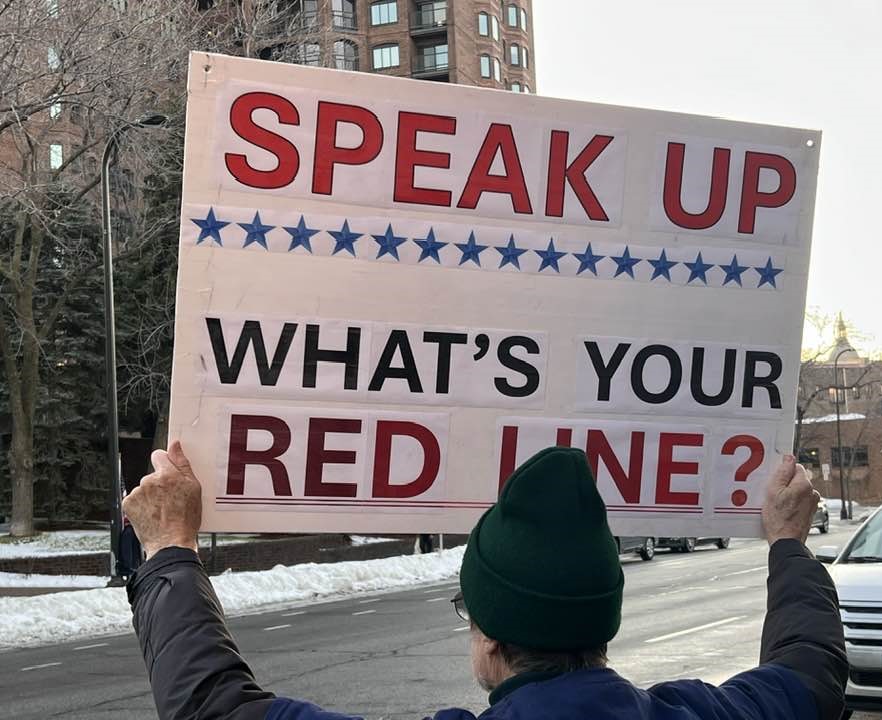
While I did not attend the vigil Wednesday night with thousands of others, my sister and I participated in the 4pm weekly standout at the intersection outside her downtown apartment building.  Signs re-used each week by the regulars are what you would expect – Resist, Wakeup, Save Democracy, No Kings – and yet the newest ones focused on getting ICE out of Minneapolis. 90% of the cars that passed honked in support of us. Continue reading

Leading Through Disruption: What Travel, Technology, and Teamwork Remind Me

Because leading well — and living fully — means not staying silent.

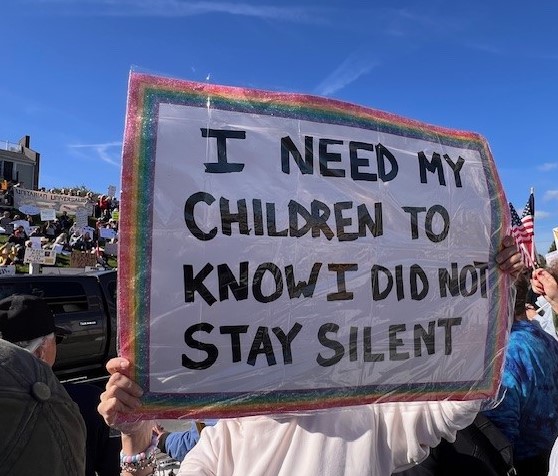
Since my last blog post in early September, I’ve travelled internationally, reconnected with a group of health IT colleagues that spanned a 30-year period of working together, moderated an AI panel at a local NEHIMSS conference, and participated in the largest peaceful protest in American history.

All these experiences are worth briefly reflecting on.

My international travel included a week in Prague on a Road Scholar Independent Art and Architecture tour with four other women as part of a 19-person group. It was a wonderful trip on many levels – art, architecture, music and history – with friends and interesting new people we got to know. On an independent afternoon, my good friend and I booked a local tour – “WWII in Prague and Operation Anthropoid Tour”. She wanted to go to Terezin, a concentration camp about an hour from Prague that I had been to on a previous tour 10 years ago. But we mistakenly booked the wrong tour and ended up doing a Prague walking tour instead – it was filled with history from the period before and during WWII. Like other times I’ve been in Europe in recent years, it’s clear that Europeans understand Fascism at a level many Americans don’t or are unwilling to.

On our way back from Prague, that friend and I met our husbands in Iceland for 5 days of touring on our own. While it was a wonderful time in a beautiful country, it was a great lesson in accepting what is not in our control. In this case, the weather! It was grey, rainy and windy for much of the week with no opportunities at night to see the Northern Lights. My advice for Iceland travelers – pack layers and waterproof clothes/shoes/boots (we did) and be flexible. The weather can change dramatically in an hour. And don’t hold your breath that you’ll see the Northern Lights.

Reconnecting with IT colleagues from the Partners HealthCare days (now called Mass General Brigham) was a poignant reminder of how a talented, committed group of people can make a significant difference. For those of you who don’t know John Glaser, just know that he led transformative changes in health IT starting back in the 1990s as we rolled out leading edge systems focused on improving patient safety and much more. I still consider him a mentor who has greatly influenced me as a leader, and he is a legend in our health IT industry. I’m honored to say I was part of that work at Partners as the CIO at Brigham and Women’s Hospital in the early 2000s.

Fast forward to 2025 and it’s all about AI. Last week, I moderated a panel titled “Challenges and Considerations for Implementing AI Within the Enterprise” at the HIMSS New England Chapter Digital Health Conference – “Survival Guide for the Disruption TsunamAI in Healthcare”. We covered governance, clinical integration and validation, strategic choices of build vs buy vs partner, measuring success and ROI, and the human aspects. The final question for the panelists was if you had to give one piece of advice to leaders preparing for AI in the next 2-3 years, what would it be? Their advice was short and to the point:

    • Use it / learn it.
    • Go slow / Don’t be afraid of it.
    • Have a strategy / Iterate often / Find a partner.
    • Keep up with what end-users are using.

With AI in mind, I’ll pivot to the last point – separating fact from fiction and recognizing real images rather than AI generated ones is something we all must keep in mind. We are bombarded daily with the most divisive, nasty politics I’ve ever seen on social media and in the news.

Know your values and stick to them. Engage in civil conversations and disagreements with others. And as my sign at Saturday’s peaceful protest said, “The Power of the People is Greater than the People in Power”. I’m an optimist!

Insights for Leading Through Uncertainty

Is it writer’s block or being discouraged by the state of our country that is getting in the way of my writing these days? I admit that I struggle with what to write that my loyal readers would relate to and be willing to read. One of the people I’m currently coaching noted this week that it’s been a while since I wrote a blog post and she missed seeing something from me. Maybe others are thinking the same, or not.

After some thought, I decided to do what many on social media do, amplify! There is so much great content from others to share.

Who to amplify was not a hard decision. My colleague at StarBridge Advisors, David Muntz, has been writing most of our View from the Bridge blog posts for some time now. He wrote two very insightful and grounding posts in recent months that have helped me have a more positive perspective in these troubling times. Given the reactions these blogs have generated from readers, they appear to have been valuable overall to many others as well.

As the titles suggest, he shares lessons from healthcare and his experience as a leader that we can all use during these challenging times.

Living and Leading in Chaotic and Uncertain Times

From Healing Hands to Healing Hearts: What the Nation Can Learn from Healthcare

I highly recommend you find time to read them both and share widely with your own network.

When Politics Threaten Healthcare: Will You Stand Up?

If you work in healthcare, you understand the importance of public health, disease prevention, and research. Even if you don’t work in healthcare, you and your family use a range of health services and count on having access to some of the most advanced healthcare in the world.

But the new administration in DC may be causing you concerns as a healthcare professional and/or consumer of healthcare. Maybe you are concerned that the new Secretary of Health and Human Services (HHS) is anti-vaccine and anti-science. On the other hand, you may be optimistic about potentially positive changes around processed foods as he says he will “Make America Healthy Again”. The irony of those two points is not lost on me.

Maybe you are worried about cuts to Medicaid and Medicare. But you hear leaders in Washington say that will never happen. Or maybe you are a veteran concerned that your health benefits and services will be reduced. Maybe you or a family member care about cancer or Alzheimer research. All of these are legitimate concerns shared by millions of Americans.

I shared a post on LinkedIn a week ago that included a link to the 42-page list of grants that the National Institute of Health (NIH) had cut. As Dr. Michael Wagner, President and CEO of Care New England said in the original post, “most of the grants targeted for termination focused on:

    • LGBTQ+ health and gender-affirming care
    • Racial and ethnic disparities in health outcomes
    • Mental health and trauma among marginalized populations
    • Social determinants of health and health equity
    • Vaccine access, behavior, and hesitancy research”

He went on to write, “This appears to be less about performance and more about realigning federal policy priorities—away from equity-focused, community-based, and prevention-oriented work.”

But maybe none of those grant cuts impacted you directly.

This week there were significant HHS cuts, and many programs were gutted. I’d be surprised if one of them didn’t directly impact you. Continue reading

Women’s History is Now: Why We Must Keep Pushing Forward

It’s the last week of Women’s History Month. I’ve been pondering what to write over the past week given the ongoing assault and threats to diversity, equity and inclusion efforts nationwide. Last year I wrote about the diversity initiatives in our health IT industry and was optimistic about what I saw happening.

If I’d written this year’s post a week ago, I would have been upbeat and inspiring having just heard our minister, the Reverend Susan Milnor, deliver a sermon titled “Trust Women”. She opened with these words:

“Lived experience is history in the making, and we know this about history.  As much as we would like for it to be linear progress toward justice and equity, it isn’t. Dominance and greed circle around again, and we have to challenge what’s asserted and enacted and propagandized.  The point of studying history isn’t just to be proud of the giants of the past; it is to be inspired for the work that still needs to be done, or done again.  Sadly, the struggles of our own time are beginning to sound way too much like those of the past. The good news is that there is so much inspiration, so much strength, in the lives of the women who came before.”

After talking about women who dedicated their lives to ensuring reproductive rights and the right to vote, she closed with these words:

“I hope we will learn the lessons of history that submission and compromise don’t get us very far, but courage does.  And I hope we won’t be in the fight alone.  It’s so important that men and nonbinary people join with women in solidarity.  

Perhaps in that advocacy, it’s time to leave aside complicated arguments and just insist on deep, spirit filled confidence.  Say it whenever you can. 

I trust women to make decisions about life. 

I trust women to use as much reason as others when they go into a voting booth. 

I trust women to serve on the Supreme Court, where they have largely outperformed a lot of men.  

I trust women in professions even if encouraged by a diversity effort because they are some of the most ethical professionals and most reliable workers.

I trust women to know what their last names are. (A reference to the proposed SAVE Act, introduced into Congress in February, which would create a federal voting requirement in which one’s birth certificate and current ID must be in the name.)

I trust that women are people, and their consent to being governed is needed. (A reference to one of the creators of Project 2025 saying we should return to women not having the right to vote.)

The work of seeking freedom and agency is holy work because it is the work of realizing a fuller humanity.  We can trust women never to give up. We have been here from the beginning, and we will rise, if necessary, again and again and again.”

If your weeks are anything like mine, I go up and down depending on what I read in the news and realize the many backward steps happening on so many fronts. Continue reading

Guardrails Matter: Protecting Ethics, Trust, and Stability in Health IT

I don’t know about you, but my head is spinning these days. So much happening at such an incredible speed. While it may sound like I’m talking about the typical workday for health IT leaders in fast paced organizations, I’m referring to the bigger picture of our federal government under the new administration. I’ve not written a blog in several weeks – in part for loss of words and in part because I’ve had a partial work break spending time in warmer climates.

In the spirit of amplifying important messages from others, my re-entry to blogging is to share an important blog written recently by my StarBridge Advisors colleague, David Muntz – “Protecting Trusted Guardrails: The Perils of Removing Essential Protections”. David has firsthand experience working in the federal government. He left his CIO role at Baylor Health in 2012 to accept a White House appointment to serve as the first Principal Deputy National Coordinator and CIO at ONC (Health and Human Services’ Office of the National Coordinator) through the following year. He was a member of HHS’ Chief of Staff Council and Chair of the Federal Health Architecture and mHealth Councils.

The message in his blog is a strong one that health IT leaders can relate to.

Guardrails, whether physical, organizational, or ethical exist for a reason. They safeguard patient safety, data privacy, free expression, and public trust while ensuring that critical institutions operate with integrity and accountability. When these safeguards are dismantled or weakened, the risks to individuals, organizations, and society become profound.

David explores the vital role of independent oversight, regulatory protections, and ethical leadership, drawing on his decades of experience in healthcare, government service, and executive leadership. Recent mass firings and policy shifts raise urgent concerns about transparency, security, and long-term stability.

Key questions that apply to our work as health IT leaders:

  • What happens when critical oversight is removed?
  • How do we ensure ethical governance in a rapidly evolving world?
  • What are the long-term consequences of dismantling trusted institutions?

Now more than ever, we must stand for principled leadership, responsible governance, and a commitment to the greater good. We must uphold the values that sustain our institutions and protect our future.

I encourage you to read his blog and as always stay informed, vigilant and engaged.

Related Posts:

Finding truth post-election: staying informed, vigilant and engaged

From MLK to Today: Defending Democracy, Diversity, and Justice Together


From MLK to Today: Defending Democracy, Diversity, and Justice Together

The irony of Martin Luther King Day and this presidential inauguration falling on the same day is one that’s hard to wrap my head around. So, I was glad to see there were several local events over the MLK holiday weekend sponsored by the No Place for Hate committee in our town.
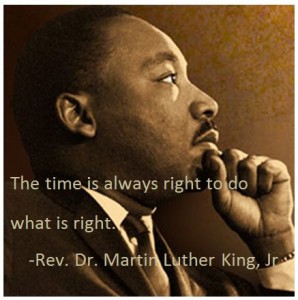
My husband and I attended a free showing of the 2018 documentary, “I Am MLK, Jr.” on Friday night. (You can find it on various streaming services at home). What a powerful story it told. In just 12 years and 4 months, the Reverend Dr. Martin Luther King, Jr. had a profound impact on our democracy and fight for social justice.

Seeing that movie made me wonder what Dr. King would say if he were alive and witnessing the inauguration today.

On Sunday afternoon, we attended a program that included a keynote from Reverend Rahsaan D. Hall, President and CEO of the Urban League of Eastern Massachusetts. At an earlier weekend rally in Boston, the Boston Globe quoted Reverend Hall as saying in response to the new administration, “We’ll double down on the three D’s of defending democracy, demanding diversity, and defeating poverty” as their north star. On Sunday, he delivered a passionate talk with a closing message that emphasized repeatedly that change takes total participation.

Yes, the fight for social justice continues and it does take total participation. Some of Dr. King’s most famous quotes are especially poignant as we prepare for this next administration:

“Injustice anywhere is a threat to justice everywhere.”

“Life’s most persistent and urgent question is, ‘What are you doing for others?”

“Our lives begin to end the day we become silent about things that matter.”

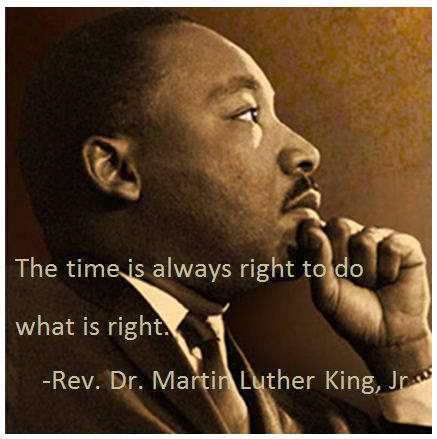
“The time is always right to do what is right.”

Shortly after the election I bought two of Timothy Snyder’s books, “On Tyranny – Twenty Lessons from the Twentieth Century” and “On Freedom”. But I’ve hesitated to jump in. As this new administration becomes reality and we see more clearly what lies ahead, I decided it was time to read “On Tyranny”. I read it in a little over an hour on Saturday and I highly recommend it. Some of the key lessons: don’t obey in advance, support institutions, believe in truth, and contribute to good causes.

On Sunday night, we watched a virtual event sponsored by Red Wine & Blue – “Keep Calm and Listen to Heather Cox Richardson: Inauguration Eve”. It was just what we needed. Richardson writes a daily newsletter called, Letters from an American, which is also available as a podcast. For well over a year, I have made reading her letter my first “to do” with a cup of coffee each morning. As a history professor, last night she put things into perspective and reminded us that small groups of people can change history.

Red Wine & Blue sounds like they are trying to do just that – their website describes them as, “A national community of over half a million diverse suburban women working together to defeat extremism, one friend at a time. We train and connect women from across the country of all political backgrounds – including many who have never been political before – to get sh*t done and have fun along the way.” In what they call TroubleNation, they already have over 500 chapters for grassroots community organizing in 49 states.

As I’ve closed some of my past blog posts, now more than ever we need to stay informed, engaged and vigilant.

Related Posts:

Finding truth post-election: staying informed, vigilant and engaged

Martin Luther King Day and why it matters – 2020

Martin Luther King, Jr. Day – why it matters

Hate has no place
Staying Positive, Telling the Truth, and Defending Care: Timely Advice for Health Leaders

In the weeks following the November 5th election, I significantly reduced my news intake, but I continue to read and stay informed as I encourage everyone to do. Objective perspective and advice on how to navigate the changes we are going through as a country is always welcome. I was struck last week by an insightful article that one of our best healthcare leaders wrote. I’ve highlighted his articles in the past in this blog. His latest is one of the best things I’ve read in recent weeks. You guessed it – I’m talking about Michael Dowling, President and CEO at Northwell Health.

On this 4th anniversary of what has become known as “January 6” or simply “J6” on social media, and as we watch the way a peaceful transition of power is supposed to be, Dowling’s advice to healthcare leaders is timely. In the article, “Michael Dowling: 6 priorities for health leaders in a new era of change and disruption”, published in Becker’s Hospital Review on January 2nd, he discusses 6 key areas to consider:

  1. Maintain a positive attitude.
  2. Tell our positive story.
  3. Be a conveyor of truth.
  4. Be supportive of new opportunities.
  5. Defend access to care.
  6. Values matter.

While they all resonate with me, #3 really strikes a chord as we consider some of the potential new faces who will be leading and influencing healthcare in the new administration. As Dowling says: “We must never waver from our responsibility to preserve credibility and trust in evidence-based science. Scientific discoveries and their resulting treatments have had profound, positive benefits in increasing the lifespan of people worldwide. We must not be afraid to denounce skeptics who promote misinformation and stoke public fears.”

The last point is also a powerful one for me, yes, values do matter. As Dowling says: “Now more than ever, we as healthcare leaders need to promote the values of decency, respect, integrity, honesty and trust. We must be positive role models who embrace a sense of unity, togetherness and community — not anger and resentment.”

Leadership is hard. Staying true to your values is hard. But we owe it to those we serve.

Related Posts:

Towards a more civil society

The healing power of humanity

Finding truth post-election: staying informed, vigilant and engaged

It has been over a week since the election. For some of us, an incredibly long week of processing our reactions and considering how we go forward. My first response was disbelief and dread. Then came the sadness. As the days go by, I am thinking more and more about how to continue to have a voice and make a difference. I won’t just sit by and watch. I want to help make a better future for our Nation and for the World.

Misinformation played a big part in our elections. As I said in 2016, we must stay informed, be vigilant and engaged. Separating the facts from fiction is more important now than in the past.

If you share my concern about the level of misinformation, I offer a few resources to consider adding to your reading or listening list.

Heather Cox Richardson writes a daily newsletter called, Letters from an American, which is also available as a podcast. For well over a year, I have made reading her letter my first “to do” with a cup of coffee each morning. As a history professor, she is a master at framing the events of the day in a historical context. The November 12th letter was a master class in “careful what you ask for”. It was downright chilling to read.

Joyce Vance writes a daily newsletter called, Civil Discourse. She is a former United States Attorney, currently a law professor and a legal analyst for MSNBC and NBC. She also co-hosts two podcasts, #SistersInLaw and Cafe’s Insider. As she says, “I believe that being a citizen is the most important work any of us can do. As citizens, a key part of our role is to educate ourselves and stay informed”. She focuses a lot on the legal issues, so I don’t always get through her newsletter but the one dated November 9th, “The Importance of Information” is well worth reading to understand the level and impact of disinformation in 2024.

Yes, you may consider these two sources liberal and want more centrist or both-sided sources, but I am looking for big picture context from fact-based, credible resources to inform and inspire me. If you have other recommendations, I’m open.

A friend and former colleague during my Michigan days recently shared on Facebook that she regularly reads Tangle. They self-describe as a “non-partisan politics newsletter giving a 360-degree view on the news – opinions from the left, right and center so you can decide”. As they say, “unbiased news for busy people”. I just subscribed to check it out.

And as social media platforms are evolving, I’m ready to make my move from X to Bluesky. It’s well past time for that given what X has become.

The future is what we make it. To stand idly by and watch is not in my nature. That’s why I use a wide range of sources, treating each with a bit of skepticism, working to develop a Truth that will help benefit the Greater Good based on facts and evidence supported by optimism. We can always be better – individually and collectively. I will continue to support organizations and political leaders who share my values and sense of purpose.

Your Voice is Your Power: Standing Up for Democracy in a Divisive Election Season

As we go about our daily work and home life, who can forget that there is an election going on? Even if you are not watching or reading the news you can’t escape it. Nor should you. This is probably the most consequential presidential election of our lifetime. We all must ask ourselves what kind of world we want for our children and grandchildren. Who speaks to our values? Who can we trust with our future and our democracy?

If you know me or are a regular reader of my blog, you know my answer. Yes, I have a button that says, “We are not going back”. And I have my “I voted early” sticker. With this consequential election a week away, I can’t be silent.

I proudly display my RBG art in my home workspace where she is visible over my shoulder on all my zoom calls and podcast interviews. It is often a conversation starter with both men and women when they see it for the first time.

While we may want to shy away from speaking out and openly supporting the candidate of our choice, I have great respect for people who are willing to publicly state their support for Vice President Kamala Harris and Governor Tim Walz as our next President and Vice President. This includes a growing list of business leaders. And not to be ignored, many long-standing Republican leaders and former Trump administration officials are warning us based on their first-hand knowledge and experience that he is unfit to lead and a danger to our democracy.

I am encouraged to see healthcare leaders willing to post their very insightful support for the Harris/Walz ticket on LinkedIn which is supposed to be a professional network and not political. Continue reading